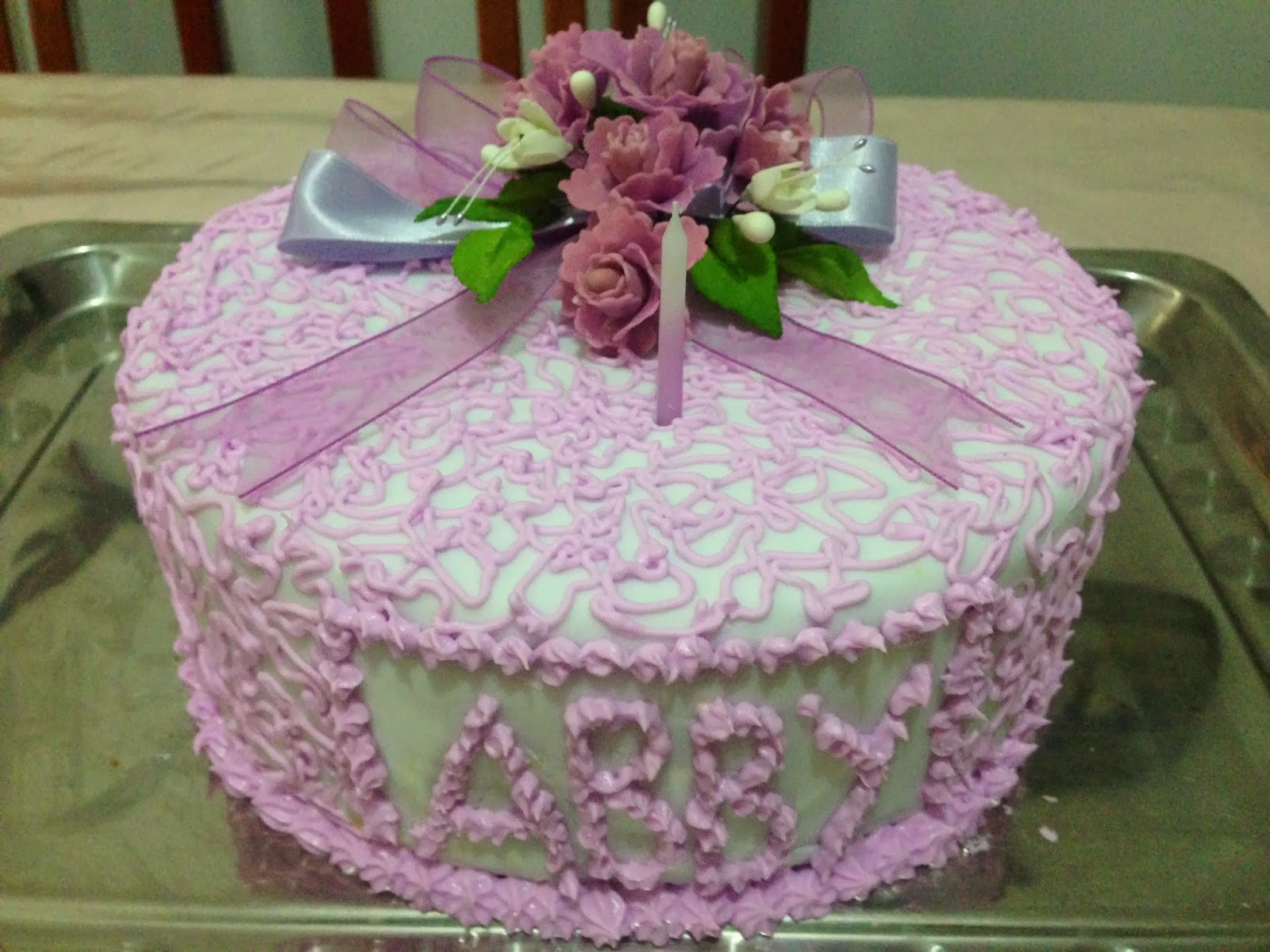
Thursday, February 6, 2014

What?! I'm 23 already. When did that happen?

MINI UPDATES (to make up for my long blogging absence)

CHRISTMAS DAY

Although everyone says that Christmas Day is the 25th, I almost don’t believe them. The celebration starts on the evening of the 24th and carries into the early morning hours of the 25th. Many families goes to mass in the evening, bringing their baby Jesus from their nativity scene. Baby Jesus has been covered in the nativity because he really shouldn’t be in the scene yet, but for the mass he lies uncovered on a table with dozens of other baby Jesus’s and waits for the priest to come bless him after the mass. He then disappears under a cover again until midnight. I think my family really sought to understand the last hours of Advent because after mass ended at 8:00pm – ¡¡8:00pm!! – we sat bored out of minds in various places around the house and waited until midnight. I figured the TV in the living room didn’t have cable because no one turned it on. I came to find out at about 11:30pm that they did indeed have cable, but like I said, I think they were just subconsciously seeking to understand the waiting period of Advent. At midnight we all wished each other a Feliz Navidad with kisses on the cheek and then ran famished to the dinner table. It was finally dinner time. I ate about four different kinds of pureé (mashed potato, mashed sweet potato, apple pureé, and pineapple pureé), a seaweed salad (or something that looks like it), and turkey. We toasted with about an eighth of a glass of sweet wine. Dessert was my beloved (not!) panetón with hot chocolate. Then came presents and chatting. But by 3 or 4:00am on Christmas Day the celebration was over and everyone was sleepily rubbing their eyes and starting to wonder whether they’re going to try to find a taxi to get home or just sleep on the living room floor under a blanket. My theory: I think those wee hours of the morning still belong to the day before.

I met my host mom’s sisters for the first time at our Christmas celebration, and all jokes aside, it was a difficult experience to finally meet her sister who had a severe stroke a year ago. She can’t walk, has difficulty moving her arms and hands, and only recently has been able to form a few garbled words. The hardest part is that she is very much there mentally. There has been some damage, but she understands everything going on around her. She is extremely frustrated with her physical limitations and verging on depression. She broke down in tears twice while I was there out of embarrassment and shame I think. It is beautiful, however, to see the way that the sisters have come together and sacrificed so much to take care of her. It has cost a lot emotionally for them though. Prayer would be very much appreciated.

CUZCO & MACCHU PICHU

Because of the fact that Christmas Day has shifted to the 24th of December here in Peru, Blake and I were able to head to Cuzco on the 25th. I got a few hours of sleep before I had to get back to my house to shower and pack really fast before heading to the airport for a 1:00pm flight. The 10 days I got to spend in Cuzco were just what I needed. It was absolutely wonderful to get to spend quality time with my YAV friends and meet some new friends as well. We spent a lot of time relaxing around Cuzco and trying out the different worldwide cuisines that I’ve missed even while enjoying my host mom’s cooking. My favorite was some deliciously spicy falafels. It was the rainy season, so it was relatively chilly and poured down rain most afternoons and some mornings as well. We spent a lot of time shopping for sweaters for Blake and long sleeve t-shirts for Spencer and hiking to the top of all the hills for me. The highlight of the trip, though, was the Salkantay trek that we did. We spent three days hiking up and over a 4,600-meter pass and then the fourth day enjoying Macchu Pichu through the fog. There were so many great moments but hopping from rock to rock to avoid probably a mile of thick mud, crossing a river on a little cart connected to a cable, having great conversations when there was room to walk two-by-two, and making it to the top of Macchu Pichu mountain stand out.

Panorama of Cuzco.

Trying out the cuisine.

The whole group.
Picture with the llama!


Crosses at the top of the hill.

That's Salkantay Mountain in the background.

We made it the pass - 4,600 meters! (Our guide Abel is on the far left.)

Lunch site Day 2 of trek.

Crossing the river.

There were stairs like this all the way up Macchu Pichu Mountain.

Top of the mountain. It was too foggy to see the ruins except for a short 30 second glimpse!

It cleared up a bit in the afternoon. So impressive.


BIRTHDAY

Birthdays here are such a big deal! I was ready to pass the day with a few “Happy Birthdays” and maybe a special lunch, but it turned out that the festivities stretched for about a week and a half. People kept expecting me to have big plans and worried about me when I said that I was okay with just having a chill day. Here’s a glimpse of the activities… Friday before: Lunch out with my coworkers followed by singing (first Happy Bear-thday in English, then two or three Spanish versions) and apple pie and ice cream. Jan.12: Brought gifts by my host mom and brother at 8:00am. Delicious shrimp pasta lunch with host family and Jed and Jenny. The movie Frozen with my host mom. Over the next week: Birthday donuts with Emma. Delicious nut pasta with host family and Emma. Two homemade and beautifully decorated birthday cakes from Aunt Fabio. Cake (1of 2) and singing at Ada’s sister’s house. Birthday cake (2 of 2) shared with the office. Receive gift of German pretzels and coffee. Birthday cards in the mail.

Thank you everyone for making me feel so extremely loved and taken care of!

The fam. (My host mom is on the far left.)

Blowing out the candle.

Cake 1 of 2.

Cake 2 of 2.


UPDATE ON WORK

Since the end of the year I have not been working for CENCA anymore. With my YAV coordinator, Jenny, I decided for many reasons that it would be better to focus my time and efforts on my Fair Trade job. So since getting back from Cuzco I work full-time with Bridge of Hope.

The decision was a good one. My time has been well occupied over this last month with Bridge of Hope. Over the past couple of years there has been a lot of changes in leadership and because of that, there has not been good follow-up as far as updates go. We get emails all the time wondering if our organization still exists because the website hasn’t been updated at all since 2010. Because of that, we are working on getting up a whole new website in both English and Spanish. I am more or less the point person on that project. I visited all 8 artisan groups in Lima to work with them a little on design of a new “product line” for 2014 and to get new pictures and information to update their profiles on the website. I have been rewriting and translating the group profiles and meticulously posting and adding titles, captions, etc. for all of the products that we sell – that’s a lot of products! That project should be done pretty soon. I will post the link on my next (hopefully!) blog so you can check out all my hard work ;) The one thing the artisans always ask of us is to find them new clients so they can get more orders. Many of them depend on this work to provide for their families, so when there is a slow year, like this last one, they struggle to get by. We hope that with this new website we can attract some new customers.

Once the website is up you will get to see some of my pictures, but if you’re interested in getting a sneak preview of the group profiles, check out my drafts in the Google Doc.

COMING UP

Next week a group from the Hudson River Presbytery in New York, which supports Jed & Jenny’s ministry, is coming down to visit Peru and see first hand the work that the Joining Hands Network is doing. Jed is leading the visit, but I will be accompanying them the whole trip to help with translating and a few logistical things. We will be doing things like visiting a few of the members of the Joining Hand Networks, visiting an artisan group, traveling to La Oroya and Huancayo, and seeing a few sights around Lima. That’s from February 13th – 22nd.

On the same day that I’m finishing up with this visit, the 22nd, we are taking off for our second YAV retreat. (I can’t believe it’s here already!) We have a 16-hour bus ride to get to the far north of Peru to Mancora. We are staying in a house on the beach. I am so ready to spend some time soaking up some glorious rays with my lovely YAVs! We have to jet up to Ecuador to renew our visas, but other than that we are just relaxing on the beach and spending a lot of time in worship and reflection. We arrive back in Lima on March 1st.

FOOD FOR THOUGHT

“Christianity is not first and foremost a concept. It is, above all, a fact.” – Gustavo Gutierrez, Theology of Liberation


“Don’t ask what the world needs. Ask what makes you come alive, and go do it, because what the world needs is people who have come alive.” – Howard Thurman, theologian

Saturday, December 21, 2013

My Travels in the Andes :: The Christmas Season

THE PROVINCE OF HUANCAVELICA


I got the opportunity to travel to the province of Huancavelica a couple of weeks ago now, leaving on Sunday, December 8th, at 7:30pm on an overnight bus and arriving back in Lima on Sunday, December 15th, at 5:30am after traveling all night. I went with Daniela, my coworker with fair trade, to visit the artisan groups that live in this area. One of the groups lives in the city of Huancavlica, and the other three groups live in the tiny district of Yauli, about 40 minutes by car from the city of Huancavelica. The purpose of these visits was to get to know the artisans face to face, since we only ever get to talk to the leader of the groups on the phone or through email, and offer workshops for the groups to help them think about how this past year went production-wise (quality control, efficiency, timeliness, etc.) and make suggestions for how they can improve in this next year. I led the more social aspect of the workshop and did a couple activities to help them construct what it means to be a part of a team and be a leader within the group.

El Mercurio. Huancavelica.

Sumacc Ruraq. Yauli.

Tupac Yupanqui. Yauli.

A possible new group: Achkamaki. Yauli.

It was a much to different experience than being in Lima, both in working with the artisans and in life in general. I loved it though… especially Yauli! Here are some notes on my experience:

LANDSCAPE/WEATHER: We were high up in the Andes Mountains - more than 3,600 meters (>13,000 feet). I’ve traveled to this altitude several times now so I don’t feel it too much, but the lack of oxygen in the air was definitely noticeable as we did a little hiking around. It is gorgeous here! They are in the rainy season there (somehow it works so that certain areas of the country are in winter even while Lima is entering into summer), so everything had a soft coat of green grass. There were lots of open pastures for sheep and cows scattered around and people had squares of farmland where they grow mostly native potatoes. This region of the country is known for its potatoes. There are supposedly more than 3,000 varieties of potatoes grown here! The weather felt like a mix of fall and spring in the northwest. The days were chilly and crisp with the sun peeking out and offering warmth here and there, interspersed with a fresh rain that nourished the rich soil but also made everything muddy. We had to expect any and all types of weather at all times.


Old church in Huancavelica.

View up the river in Huancavelica.

View of the mountains in Yauli.

Beautiful little waterfall and cow pasture next to the river in Yauli.

Cute little runt pig!

LANGUAGE: In this area of the country pretty much everybody speaks Quechua. In Huancavelica most people also speak Spanish fluently and for many it is their first language. There were still a couple artisans we worked with that could not respond to us in Spanish. They understood everything we were saying but would respond in Quechua and someone would have to translate. However, among the people I met in Yauli, I think everyone’s first language was Quechua, and if they spoke Spanish, it was something they didn’t begin learning until later. Many people still didn’t understand Spanish well let alone were able to speak it. The accent of Spanish I heard in Yauli was really strange as well and made it difficult for me to understand at times. (For example, a lot of the ‘e’ vowels in Spanish end up sounding like an ‘i.’ Also, most of the r’s that come at the end of words sound more like ‘rsh.’) I joked with Daniela that I was having a hard time distinguishing even when the artisans were speaking Spanish and when they were speaking Quechua because their accent was so thick. They also had a harder time understanding me than most people I encounter in Lima. It was interesting trying to navigate this difficulty.

DRESS: There was not a single woman that was from Yauli itself that did not wear traditional dress. Some wore more elements than others, but at the very least everyone wore their outer skirt with deep pockets to hold their knitting. Most wore everything: their leather shoes, leggings, leg warmers, multiple skirts, multiple sweaters with a button-up sweater on the outside, a manta or special decorated cloth covering their shoulders and pinned in front (or the manta tied with a load or child on their back), two braids in their hair tied together in the back, and a hat with flowers tucked in. As if I didn’t stick out enough as a tall, white gringa already, without the traditional dress I stood out even more in Yauli and literally drew prolonged stares and dropped jaws with every step I took.

One of the women from Sumacc Ruraq.

Selling potatoes in the main plaza of Yauli.

LIFE: I love the simplicity of life in Yauli and the way people work hard and walk long distances and end up looking weathered and like they’ve put in their time. Most of the houses are constructed out of big chunks of rock held together by mud and have a tile roof. Some of the houses have a little cement, but mostly they are made out of natural materials. They have to be sure to have a good roof, though, to protect from the rain and to keep the mud from rewetting and washing away. The floors of the houses are often dirt. Walking down the street during the afternoon when it wasn’t raining, I saw in front of nearly every house at least one woman sitting on a stool or on the curb knitting. They lined the streets. At first when we would ask the artisans what they liked to do in their free time as a hobby and they would respond by saying knitting, I didn’t think they had understood the question correctly. But upon seeing that the pastime of women in this culture really is knitting, I found that assumption corrected. It is standard practice to offer guests something to eat. When we went to visit a group, they would provide us potatoes, which you are supposed to peel by hand, cheese, and a hot (really really) sweet tea. Even though they barely have enough resources to keep up with all the kids that are running around, hospitality is top on the list of priorities.

The house of Ezequiel and his family from the group Tupac Yupanqui.

An older woman leading her sheep home in the evening.

They came right past us!

OTHER PICS FROM HUANCAVELICA:

Luz. One of the children of a woman from El Mercurio.

The workshop of Sumacc Ruraq.

Jon Alex. The son of some of the founding members of Sumacc Ruraq.

Girl from Sumacc Ruraq.

CHRISTMAS CRAZINESS

First thing you need to know and understand about Peru at Christmas time: panetón. The word literally means ‘big bread.’ I like to describe it as that fruitcake that people always joke about old people serving at their house. Peruvians are obsessed with their panetón and crave it like it there’s no tomorrow around this time of year, although I still get that fruitcake sensation every time I eat a piece. It is basically a fluffy cake with raisins and red and green chunks of “real” dehydrated gummy watermelon. It is common for people’s work to gift them a panetón for Christmas. Right now we have three sitting in our house. Apparently all the bakeries stop making regular bread on Christmas Eve and only sell panetón because they can make so much more money by doing so and that’s all anyone wants anyway.

Three different brands of panetón. D'onofrio is probably the most popular.

Coming back from Huancavelica I was thrown into the Christmas craziness. This past week has been jam packed with activities and hot chocolate and panetón. The thing to do around here is have what they call ‘chocolatadas.’ It is something that NGO’s or other organizations put on for kids in poorer areas of the city. They have games, dancing, hot chocolate, panetón, and usually a gift and/or a little goody bag for the kids. Bridge of Hope put on a chocolatada for the kids in the neighborhood where the artisan group Ima Sumacc yesterday. It was absolute chaos trying to coral these sugared-up kids and be vigilant for the moms who don’t have money to buy their kids a present and therefore are hiding their kid’s present so they can hopefully get another. We were filling up baby bottles with hot chocolate and kids were walking around double-fisting their panetón. My favorite age to observe was the little toddlers!

The whole group.

The boys team for one of the games. They tried hard...

but the girls pulled a win!
Our little "gordito."

Cutest kid at the event hands down.

For this event I went shopping in the center of Lima where all the cheapest things can be bought. It is block after block of stores and markets selling anything and everything. Each street is more or less designated for a certain product, so you have to know where you are going. To name a few, there’s an electronics area, kitchen, Chinatown, shoes, clothing, and where we went, toys. There are Black Friday crowds every day fighting to get to the front of the mob to buy 12 plastic toy cars for 24 soles or 12 plastic Barbie-type dolls for 32 soles. Everything is sold in bulk and people (including myself) are walking around holding black plastic garbage bags full of toys over their heads trying to squeeze through the tiniest gap and advance through the walkways of the market. The lowest level is the hottest (my guess would be right around 105° F), but in none of the four levels do you ever stop sweating.

That being said there is MUCH less emphasis here on gift giving. Kids do not expect huge piles of expensive gifts and the holiday has not reached the levels of commercialization that it has in the U.S. The tradition instead focuses more on the aspect of being together as a family and sharing a good meal together. As long as there is something on the table and someone to share it with, it is a good Christmas. Instead of presents being the focus, the nativity and the coming of Jesus is still what takes center stage, as it should.


I wish you all the merriest of Christmases and pray that God may provide for you abundantly in this coming year. May there ever be enough food on the table and good company to share it with!

Sunday, December 15, 2013

Time is moving fast.

(Disclaimer: This was supposed to be posted a week ago, but time slipped away from me. I just had a week full of adventures in the province of Huancavelica that I will post about with lots of pictures soon!)

GLIMPSES OF THE LAST MONTH

I went to La Oroya for the second half of the workshop. Instead of a rainy and snowy day a bright and hot sun greeted me. The kids were full of energy, which was both great and tiring. I was so encouraged by Esther once again as she spoke to me about how important learning about hope and the biblical worldview is in the lives of these kids. Most of them don’t have a Bible of their own, and if they do have a family Bible, many of never cracked it open. Pray that some seeds were planted these two weeks.

I went to the post office to pick up a package and was confronted by a hectic and confusing scene. It took me over an hour to finally get my package. Here’s the basic process: walk in the door and go to the processing desk, show passport, get a small stack of papers, walk to the parcels area and show papers to the guard standing there, walk to a window and show papers to the man on the other side, write down address, show passport, receive more papers, sit in waiting area, hear name called, go behind a glass wall, watch while your package is opened, show passport, give them your papers, return to waiting area, wait for name to be called, go to window to get more papers, go to another window, give papers, show passport, sign document, pay processing fee, pay a tax if items are valued over $100, and finally receive package.

With Bridge of Hope Fair Trade, I was given an order to more or less run by myself because there was a big Christmas rush. It was an order from a Peruvian woman who is now living in France, and she ordered a few things from 13 different groups. I was in contact with her by email and with all of the artisans by phone. I understand so much better now the complexity, and sometimes frustration, of running an order. The client would ask for colors that the artisans didn’t have or try to order new things halfway through the production process. The artisans would be grumpy about having to get a certificate of origin for their products or wouldn’t turn them in on time. But it was wonderful to be an integral part of the whole process and to have phone calls coming in and artisans dropping by for me. I stayed late in the office one night with my coworker tagging and packing up a ton of items while watching Megamind in Spanish and laughing and getting to know each other.


Last week we had our first retreat with the YAVs in Lunahuana, a beautiful desert landscape along a river. It was a beautiful week of vulnerability and challenging conversations but also of creativity and laughter and good food. We got to do a little white-water rafting on some Class 3 rapids, and although the river wasn’t super high yet, it meant we got to get out of the raft and float through a little section! We also felt an earthquake (5.8 ??) whose epicenter was right in the area where we were. Coming back from Lunahuana, we celebrated Thanksgiving at the house of another missionary couple, Rusty and Sara, with all the YAVs and some people from the office of the Joining Hands Network. It was fun to celebrate with a couple people who had never before celebrated Día de Acción de Gracias! We also ended the retreat by lighting a candle for the start of Advent. Although I have been reminded of the physical distance separating me from my family and friends during this season, and many times have found myself wishing I was able to be home to celebrate with them, I am ever grateful and comforted by the fact that there are these traditions that hold us together, no matter the distance. As you prepare your hearts during this time of Advent, know that you will always be in mine.

Saturday, November 9, 2013

It Is Well With My Soul

I am well. I am content. Pull up this song and enjoy while reading:

SUNDAY IN SJL

One Sunday morning in October I woke up early, got on a bus at 7:15am, and arrived out in San Juan de Lurigancho by 8:30am. I met up with Katty, a 23-year-old journalism major who has been working with the young adults out in SJL to create videos about the realities – both the good and the bad – of their neighborhoods, and Abilia, a 30-something woman who lives in SJL and has been one of the bridges between CENCA’s work with adults and young adults. Our goal: to get video footage to enter the young adult program in a countrywide contest through a government program that promotes groups of young adults and women. Our method: walk between the six different neighborhoods and interview people in each site. We took a bus as far into the area as a road goes and then proceeded to walk up steep dusty roads and stairs to find each neighborhood. It was the first sunny day Lima had in a while so pretty quickly my sweatshirt and hat came off and found their home in my bag. It was great to finally get to see where the young adults that I’ve been getting to know on Wednesday nights actually live and spend their time.

After a bike ride into Miraflores the next day, one of the richer and more touristy areas of Lima, I wrote this in my journal: “Miraflores is such a crazy change from what I saw yesterday in SJL. There are things I like about both. In SJL I loved the sense of community and togetherness that I felt in a few of the pueblos. I loved the fact that all of them were outside working and getting dirty and building things. Kids were running around playing together. I loved that you can ask anywhere where a certain person lives, and they can point you to the house and tell you if they are home or not at the moment. They call each other ‘neighbor’ and know all about each other’s lives. They are starting to put down roots – literally planting trees and bushes and flowers – but also working to put in their own infrastructure that the government has not provided. In Miraflores I love the organization. I like that the traffic is slightly less crazy there and that you can buy fresh fruit and vegetables. I like the plants everywhere and the green grass and the cleanliness. I love the corner cafes and the well/thoughtfully dressed people. I like that people are out going on runs and walking around. I like the convenience.”

To the right of me are Katty, Jon Carlos, Abilia, Shakira, and ??.

The road they're building to reach their neighborhood. 

The neighborhood Portada de Belén meeting together.


A view of one of many hillsides.
Some green vegetables growing from the hard dirt.

TINGO MARIA

This past weekend I took advantage of a Friday holiday to go on a little vacation in Huánuco and Tingo María. Emma and I took an overnight bus into Huánuco, met up with Mary Kate and her housemate/coworker/friend Ana who is from Brazil, and headed into the central jungle of Peru. We ended up hiring a driver to take us to and from Tingo María and drive us around while we were there. It was really cheap and also turned out to be fun to get to know our driver, Carlos. He is a 26-year-old guy whose full time job is transportation. He used to work selling chicken, and his goal in the next couple of years is to open up is own shop to sell pork.

We got to hike through the jungle to see the waterfalls Las Ninfas (The Nymphs) whilst getting eaten by bugs, sliding around in the mud, gawking at the “mari-posers” (mariposa = butterfly), sweating in the humid heat, and trying fruit that Carlos found for us. We drove through crazy long tunnels that had no lights inside and barely enough room at some points for two cars to pass. We got a picture at La Ducha del Diablo (The Devil's Shower) while at the same time getting a shower from the downpour that was currently coming down from the sky. We swam under El Velo de la Novia (The Bride's Veil) despite the fact that it was still raining outside. We visited an incredibly impressive cave filled with owls - La Cueva de las Lechuzas. We tried new fruits like guaba (looks like a long bean pod and has fluffy white fruit inside around massive black seeds) and aguaje (the outside looks the red scaly snake skin and has a thin layer of bright yellow fruit underneath). We ate some typical food from the jungle like tacacho (crumbly banana) and cecina (salty slice of pork). And in Huánuco we ate the best popsicle I have ever had in my life – avocado!

Me, Mary Kate, and Emma at La Ducha del Diablo.

Anna, Me, Emma, Mary Kate at the end of our hike.

Trying out some guaba.

Looking out of La Cueva de las Lechuzas.

Beautiful river... muddy from the rain!

The mountains look like a women sleeping on her back.

WORKSHOP IN LA OROYA

26 hours after arriving back to Lima from the weekend in the jungle, I got in another car to head to La Oroya. I taught the first in an installment of two workshops on creation care to a group of about 13 kids that are part of the CAMBIALO program that I talked about in my first September blog. It was good for my soul to study some theology again and let myself do more reading than I needed to just because I was interested in the subject. I also felt so extremely welcomed by them. When I arrived there was a delicious lunch of green salad, chicken, and potato waiting for me that Esther, one of the founding women of the Filomenas group, had made for me. She told me: “Normally I would have made a soup, but I thought I’d make something special today for our Abby.”

The workshop was directed to a group of kids so there wasn’t a super high level of sophistication, but we read Genesis 1 together to begin with and eventually also looked at a section of Psalm 104. We spent some time thinking about and expressing gratitude for the many blessings that we can enjoy in creation. We then, through the guidance of the Psalm, looked at the intimate relationships that exist between all things and how this can give us hope for the future even as they see the big environmental problems facing them in La Oroya. We did lots of activities, and it was really fun! I’ll be teaching the second half in a couple weeks.

On the drive home I was confronted with a beautiful sight. While it was raining in La Oroya it had been snowing at Ticlio Pass. There was a thin layer of snow on all of the mountains and as we crossed to the other side, I saw one of the most beautiful sunsets in my life. There was a bright orange sky interspersed with a few thin wispy clouds set between two snow-dusted mountains. Absolutely gorgeous. God is good.

QUOTE OF THE WEEK
(first verse of the hymn “It Is Well With My Soul”)

When peace, like a river, attendeth my way,
When sorrows like sea billows roll;
Whatever my lot, Thou has taught me to say,
It is well, it is well, with my soul.

(And for those who care to know…)

"It Is Well with My Soul" is a hymn penned by hymnist Horatio G. Spafford and composed by Philip Bliss. It is possibly the most influential and enduring in the Bliss repertoire and is often taken as a choral model, appearing in hymnals of a wide variety of Christian fellowships. It is based on Psalm 146:1.

This hymn was written after traumatic events in Spafford’s life. The first was the 1871 Great Chicago Fire, which ruined him financially (he had been a successful lawyer and had invested significantly in property in the area of Chicago which was decimated by the great fire). His business interests were further hit by the economic downturn of 1873 at which time he had planned to travel to Europe with his family on the SS Ville du Havre. In a late change of plan, he sent the family ahead while he was delayed on business concerning zoning problems following the Great Chicago Fire. While crossing the Atlantic, the ship sank rapidly after a collision with a sea vessel, the Loch Earn, and all four of Spafford's daughters died. His wife Anna survived and sent him the now famous telegram, "Saved alone …". Shortly afterwards, as Spafford traveled to meet his grieving wife, he was inspired to write these words as his ship passed near where his daughters had died. Bliss called his tune Ville du Havre, from the name of the stricken vessel.

The Spaffords later had three more children, one of whom, their only son, Horatio Goertner Spafford, died at the age of four, of scarlet fever in 1880. In 1881, the Spaffords, including baby Bertha and newborn Grace, set sail for Israel. The Spaffords moved to Jerusalem and helped found a group called the American Colony; its mission was to serve the poor. The colony later became the subject of the Nobel prize winning Jerusalem, by Swedish novelist Selma Lagerlöf.


(just pulled from Wikipedia, but still really interesting!)